The Case for Universal Basic Services: Why We Should Combine All Social Programs into One

In today’s American economy, something isn’t adding up. Growth is up. Unemployment is down. And yet, people feel like they’re barely treading water.
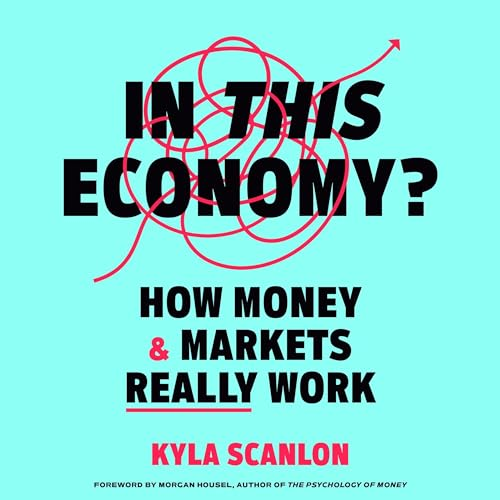
Financial educator Kyla Scanlon calls this the “vibecession”: a disconnect between what the data says and what people actually experience. Or, as she writes in In This Economy?, “metrics can stabilize while people destabilize.”
For many, this isn’t just a vibe—it’s a daily negotiation between rent, childcare, healthcare, and food. It’s broken infrastructure.
Why the Current "Silo" System Fails Us
Research shows that the "siloed" nature of our current welfare state actually keeps people in poverty. For example, a study on welfare reform found that even when single mothers increase their earnings, the rising cost of childcare and the loss of food stamps often leave them worse off than before (Meyers et al., 2001).
Meaning, when she moves into a different income bracket, she loses services she no longer qualifies for. Suddenly, the daycare she used to access for free via a voucher program begins to eat up all of her earnings—she may actually end up with less take-home pay than she had before her raise.
I’ve actually heard parents say they don't want the raise they're being offered because they will lose their housing subsidy and have to pay more for rent! When programs are unified, we eliminate the hesitation to move up in the world.
Moreover, we limit the "Administrative Burden." No more spending hours on the phone with different agencies to prove you are poor enough for milk but not too rich for rent assistance.
In her book In This Economy?, Kyla Scanlon argues that we need to rethink how we value "human capital." She points out that the economy isn't just numbers; it’s how we take care of each other.
The Cost of Living Crisis: Scanlon highlights that things like healthcare and housing have "disconnected" from standard inflation, becoming massive burdens that individual "budgeting" can't solve. We're all one medical emergency from bankruptcy.
The Trust Gap: A unified system builds social trust. When programs are universal (available to everyone) rather than means-tested (only for the very poor), they tend to be higher quality and harder for politicians to cut.
The Problems with the Current Path
Problem #1: A Patchwork Welfare System
Today’s safety net reads like bureaucratic alphabet soup: SNAP, WIC, Medicaid, Section 8, SSI. Each program has its own rules, application, waitlist, and eligibility requirements that can sometimes be contradictory.
This results in a system that requires near-expert navigation from the very people with the least time and bandwidth. Research on administrative burden shows that fragmentation alone reduces program uptake—even among eligible families (Herd & Moynihan, 2018).
What if we stopped layering programs and started building a platform? That’s where Universal Basic Services (UBS) funded by a Unified Social Fund (USF) comes in. Rather than distributing survival through vouchers, UBS treats essentials—healthcare, housing, childcare, food, and education—as public goods, akin to roads or public schools (Coote & Percy, 2020).
As Scanlon puts it: “We don’t need more financial products to survive—we need systems that make survival less expensive.”
Problem #2: The Border Problem
The American economy celebrates mobility—moving for the better job or the better school district. But our safety net punishes it.
Because most programs are state-administered, crossing state lines or even county lines often means losing benefits and having to reapply into the same program under different conditions. Research on Medicaid “churn” shows that even short administrative gaps lead to worse health outcomes and higher long-term costs (Sommers et al., 2016).
A unified federal system would eliminate this friction. Your eligibility for support with basic needs wouldn’t reset with your ZIP code. It would move with you (and adapt to your current circumstances) like your Social Security number, not like a gym membership.
Problem #3: The Fire Department Philosophy
We already understand collective protection; we just don’t apply it consistently. Fire departments don’t check whether you've paid your taxes before putting out a fire. They respond because unchecked fires spread.
Poverty works the same way. Right now, food insecurity and unstable housing spill into emergency rooms and schools. Public health research frames social spending as preventative medicine. Investments in housing and nutrition reduce downstream healthcare costs (Taylor et al., 2016). That is, there exists the choice to pay upstream or we can pay (more) downstream.
Problem #4: The Middle-Class Squeeze
During residency, I watched colleagues—highly trained physicians earning well above the poverty line—struggle to afford childcare. Not luxuries. Basics. If doctors are doing financial gymnastics to raise children, what does that say about everyone else?
As Scanlon argues: “If working harder doesn’t create stability, the problem isn’t effort—it’s structure.”
The Blueprint: How a Unified Fund Supports Universal Basic Services
A pragmatic roadmap for a USF:
Funding Universal Basic Services (The 6–8% Floor): Modeled after Social Security, a modest pre-tax contribution (estimated 6–8%) could fund a universal baseline. High earners aren’t just subsidizing others—they’re investing in a system that stabilizes the economy they rely on, reduces volatility, and ensures baseline security for everyone—including themselves. It works like insurance; high earners may one day fall into hard times, too.
The Sovereign Wealth Multiplier: A portion of contributions would be invested—similar to Norway’s sovereign wealth model—allowing returns to offset future costs. Over time, the system begins to sustain itself.
The “One-Door” Experience: One system. One eligibility framework. Behavioral economics shows simplification dramatically increases participation and outcomes (Thaler & Sunstein, 2008).
Education Without the Debt Trap: Folding higher education and trade programs into UBS transforms schooling from a financial gamble into a developmental tool for self-actualization. This, in turn, would move people further to the right on the spectrum from qualifier to contributor.
No More Benefit Cliffs: Support phases out gradually as income rises, preserving work incentives. As Scanlon frames it: “Security isn’t the opposite of ambition—it’s the precondition for it.”

Rebutting the Critics of Universal Basic Services
Critique #1: “How do we pay for it?"
A unified welfare analysis shows that direct investments in children’s health and education have some of the highest returns on investment in history (Hendren & Sprung-Keyser, 2020).
Critique #2: One Size Fits None
Critics worry a federal program is too rigid. However, Finland’s "Housing First" model proves that national mandates can have successful local implementations. The federal government provides the floor; the community manages the house.
Critique #3: Moochers: “People will stop working for fear of losing their benefits.”
The fear that a unified system would subsidize "moochers" assumes that people prefer stagnation over progress. The critique ignores a fundamental psychological truth: humans are wired for purpose. Data from universal programs, like the Alaska Permanent Fund, consistently shows that providing a solid floor doesn't lead to a mass exit from the workforce. Instead, it eliminates the 'fear-based' decision-making that keeps people stuck. By sharing information across a single platform, we don't just distribute aid—we optimize it, ensuring that resources act as a launchpad for independence rather than a net for stagnation.
Critique #4: The Innovation Gap: “Scarcity creates tunnel vision."
In Denmark, robust safety nets lead to higher rates of entrepreneurship because people have the security to take risks. Evidence shows minimal reductions in labor and increased entrepreneurship when the floor is secure (Banerjee et al., 2017).
Critique #5: Moral Hazard: “Why should I pay for someone else?”
Refusing to "pay for someone else" guarantees you’ll pay for it later in overcrowded ERs and under-resourced schools. Economists call these negative externalities. As Scanlon writes: “We talk about the economy as if we’re separate from each other, when in reality we’re deeply entangled.” Right now, we are asking individuals to solve structural problems with personal resilience. But resilience is not a pre-requisite for human rights. And resilience is not scalable policy. Not to mention that a child who is well-fed learns better, that a parent with stable housing works more consistently, and that a community with fewer crises is safer for everyone in it.
The economy is not just a system of exchange—it’s a system of care. When the floor is solid, people don’t stop moving—they finally gain traction.
Building an Economy That Actually Works: The debate isn’t whether we can afford a unified safety net; it’s whether we can afford not to have one.
Full References & Citations
Banerjee, A., et al. (2017). Debunking the Stereotype of the Lazy Welfare Recipient. World Bank Research Observer.
Coote, A., & Percy, A. (2020). The Case for Universal Basic Services. Polity Press.
Deci, E. L., & Ryan, R. M. (2000). The "What" and "Why" of Goal Pursuits: Human Needs and the Self-Determination of Behavior. Psychological Inquiry.
Gough, I. (2019). Universal Basic Services: A Theoretical and Moral Framework. The Political Quarterly.
Hendren, N., & Sprung-Keyser, B. (2020). A Unified Welfare Analysis of Government Policies. The Quarterly Journal of Economics.
Herd, P., & Moynihan, D. P. (2018). Administrative Burden: Policymaking by Other Means. Russell Sage Foundation.
Jones, D., & Marinescu, I. (2018). The Labor Market Impacts of Universal and Permanent Cash Transfers: Evidence from the Alaska Permanent Fund. NBER Working Paper No. 24312.
Meyers, M. K., et al. (2001). Child Care in the Wake of Welfare Reform. Social Service Review.
Pleace, N., et al. (2015). The Strategy to End Homelessness in Finland. European Journal of Homelessness.
Scanlon, K. (2024). In This Economy?: How Money and Markets Really Work. Crown Publishing Group.
Sommers, B. D., et al. (2016). Insurance Churning Rates For Low-Income Adults Under Health Reform. Health Affairs.
Taylor, L. A., et al. (2016). Leveraging Social Determinants of Health: What Works? Blue Cross Blue Shield / Health Affairs.
Thaler, R. H., & Sunstein, C. R. (2008). Nudge: Improving Decisions About Health, Wealth, and Happiness. Yale University Press.


Comments